Who built Kuélap
Who built Kuélap
The Chachapoya, centuries before the Inca arrived
Kuélap was built by the Chachapoya culture — sometimes called the "Warriors of the Clouds" in popular accounts — starting with human occupation at the site in the 5th century AD, with most of the structures dated to 900–1100 AD. That makes the bulk of Kuélap several centuries older than Machu Picchu, which the Inca built in the 15th century. The Chachapoya were later absorbed into the Inca Empire in the late 15th century, not long before the Spanish conquest arrived in the region.
A fortress-city, not a single monument
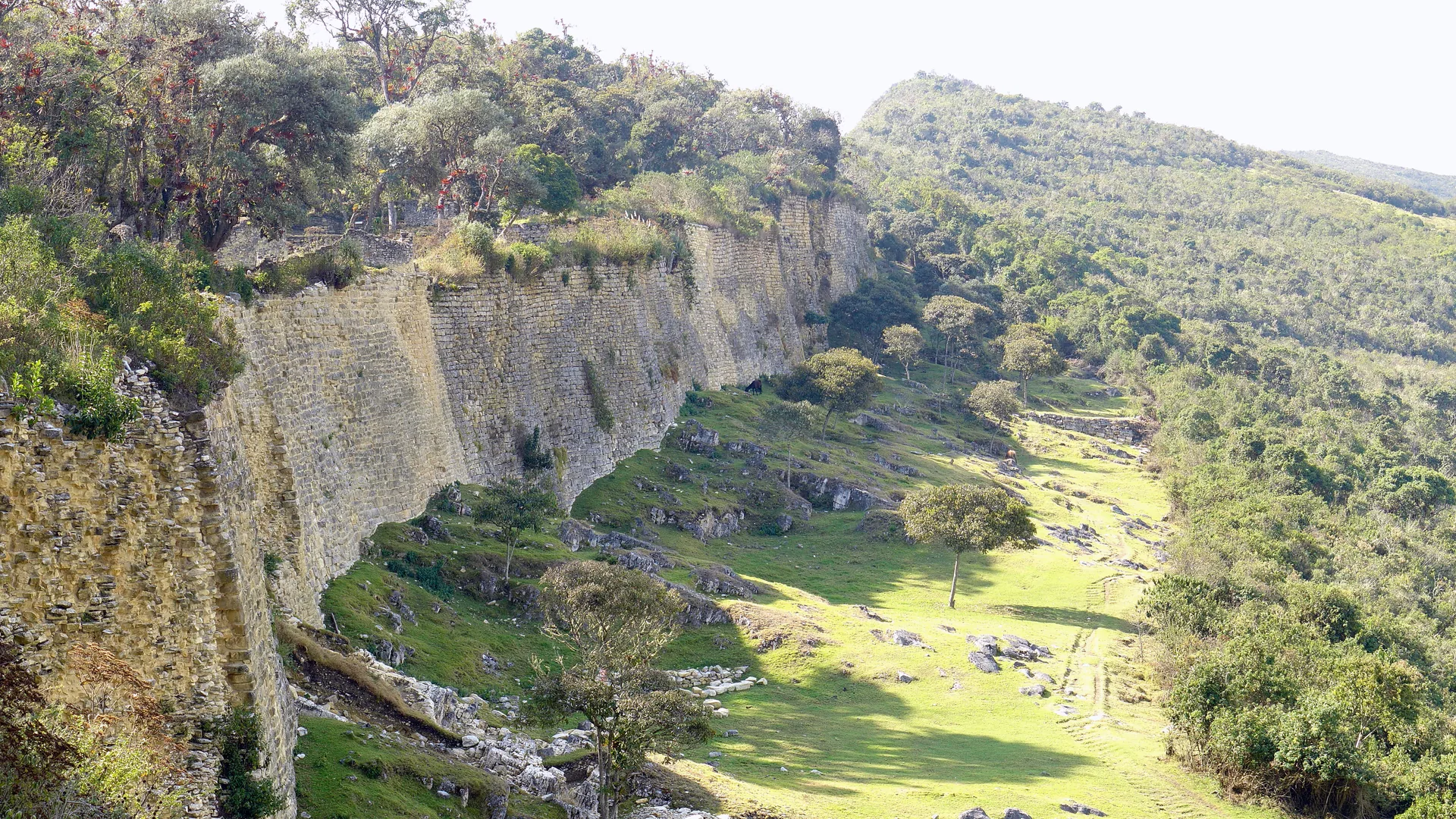
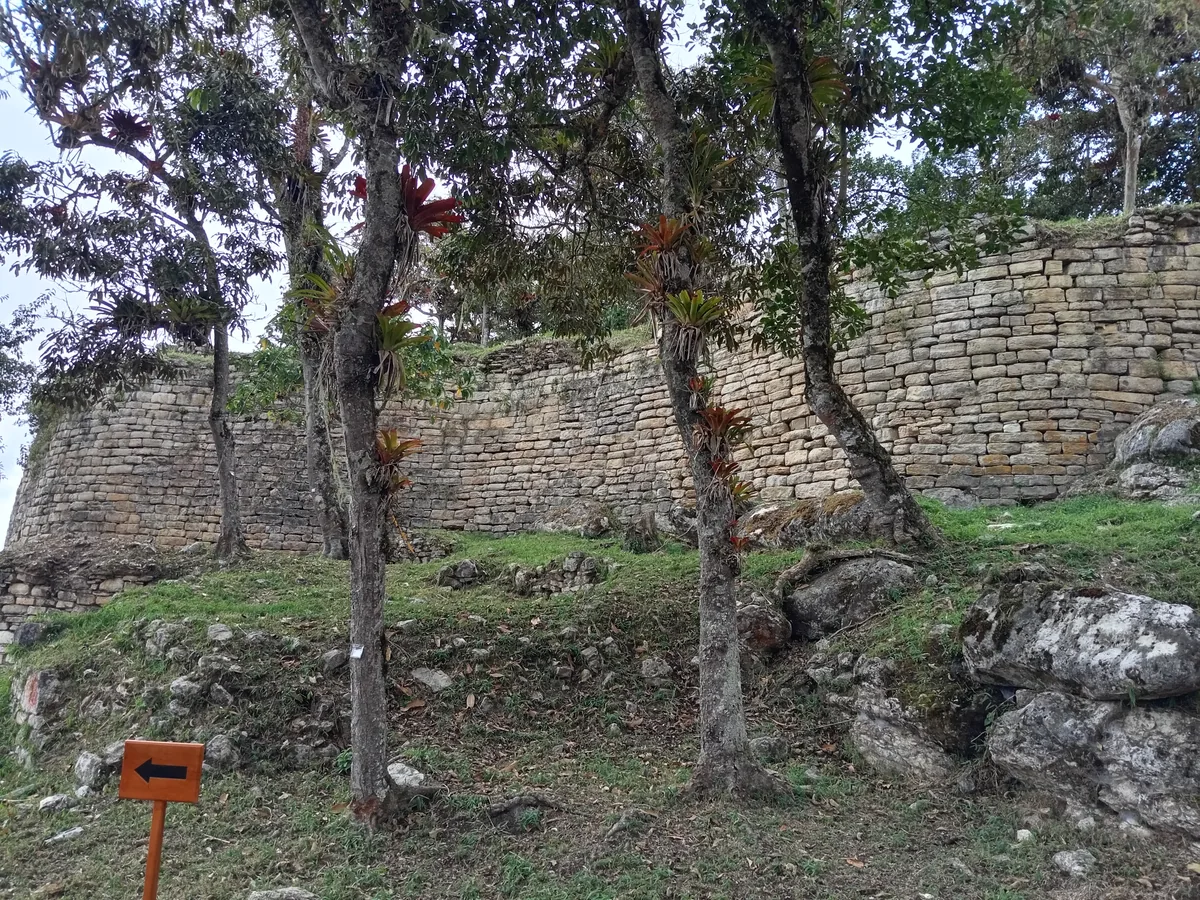
Kuélap covers about six hectares — 584 metres north to south — enclosed by walls 10 to 20 metres high, with three narrow entrances (two on the east, one on the west) that taper until only one person can pass at a time. Inside, 421 recorded structures, all but five of them circular, once housed an estimated population of around 3,000 people. Many of the round house walls carry rhomboid and zigzag stone friezes, protected from rain by projecting cornices — decoration that survives on some of the best-preserved sections.
Abandoned, forgotten, then rediscovered by accident
Kuélap was abandoned around 1570 in the upheaval of the Spanish conquest, after which the site deteriorated and was gradually reclaimed by tree roots and cloud forest. It stayed largely unknown outside the region until 1843, when a local judge, Juan Crisóstomo Nieto, came across it — a rediscovery story more accidental than the exploration narratives attached to other Andean ruins.
The ascent: how a Kuélap day actually unfolds
The ascent: how a Kuélap day actually unfolds
Almost every Kuélap tour follows the same physical sequence — it's worth knowing the shape of the day before you book.
- 1
Pickup in Chachapoyas
Tours collect you from your Chachapoyas hotel, typically between 9:00 and 9:30am — this is the regional base almost everyone stays in, reached by road or a short flight to Chachapoyas' small airport.
- 2
The drive to Nuevo Tingo
A roughly one-hour drive follows the Utcubamba valley down to Nuevo Tingo, the town at the foot of the cable car line — this is also where most tours serve lunch on the way back.
- 3
The cable car
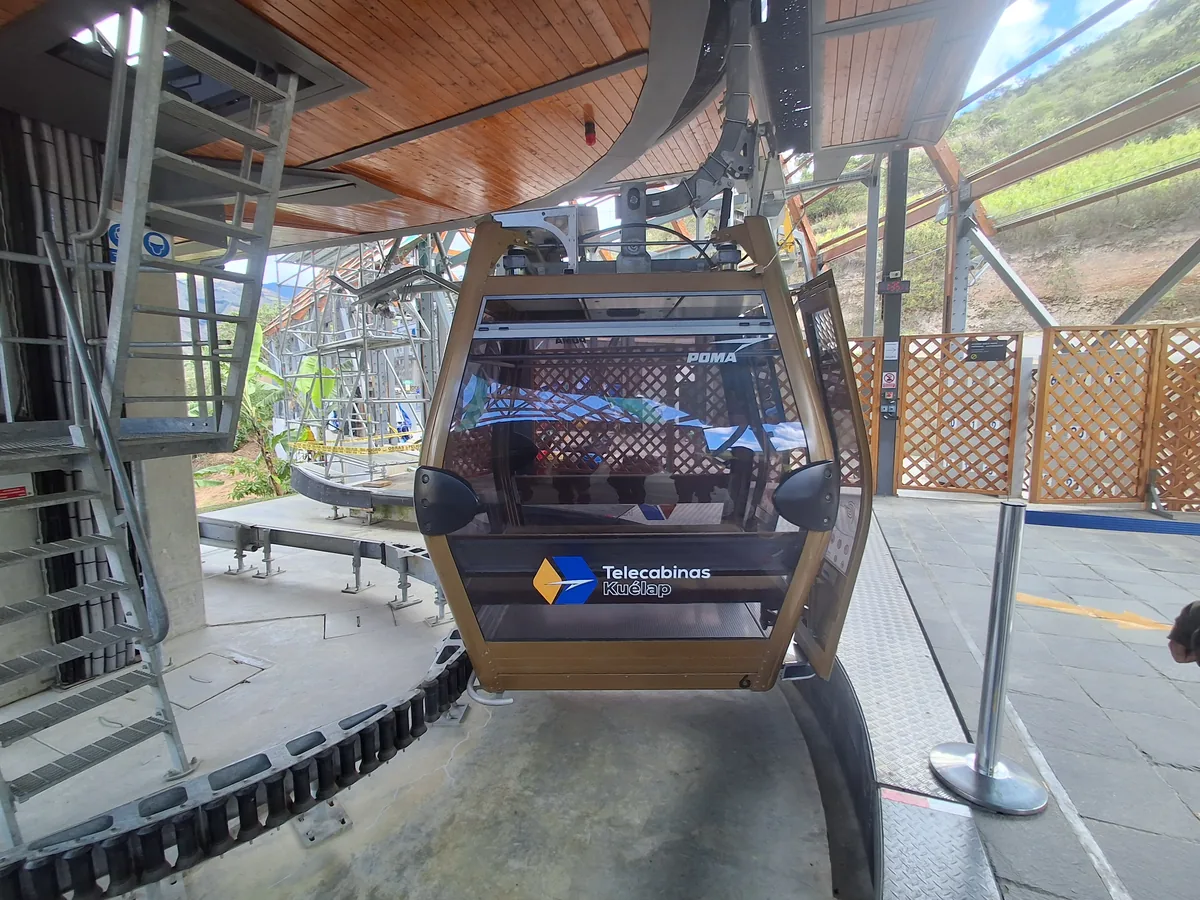
From Nuevo Tingo, a cable car — one of the more unusual ways to reach any archaeological site in South America — carries you up through the cloud line, cutting what was once a multi-hour uphill hike down to around 20 minutes.
- 4
The walk to the entrance
The cable car doesn't drop you at the gate — it's a further walk of roughly half an hour along the ridge to reach Kuélap's entrance, through cloud forest thick with orchids and epiphytes.
- 5
Inside, with a guide
Guided time inside the walls covers the main structures — the entrances, the circular houses, El Tintero — before retracing the route back down by cable car and road to Nuevo Tingo and Chachapoyas, typically making the full day around 8 to 8.5 hours door to door.
Inside the walls
Inside the walls
"Seeing Kuélap" means a specific, walkable set of structures inside the perimeter — here's what a guide is actually pointing at.
The perimeter walls and entrances
The defining feature: 10–20m limestone walls enclosing the whole six-hectare site, with three entrances that narrow to a single-file passage — a design read as defensive, though what exactly Kuélap was defended against remains debated among archaeologists.
The circular houses
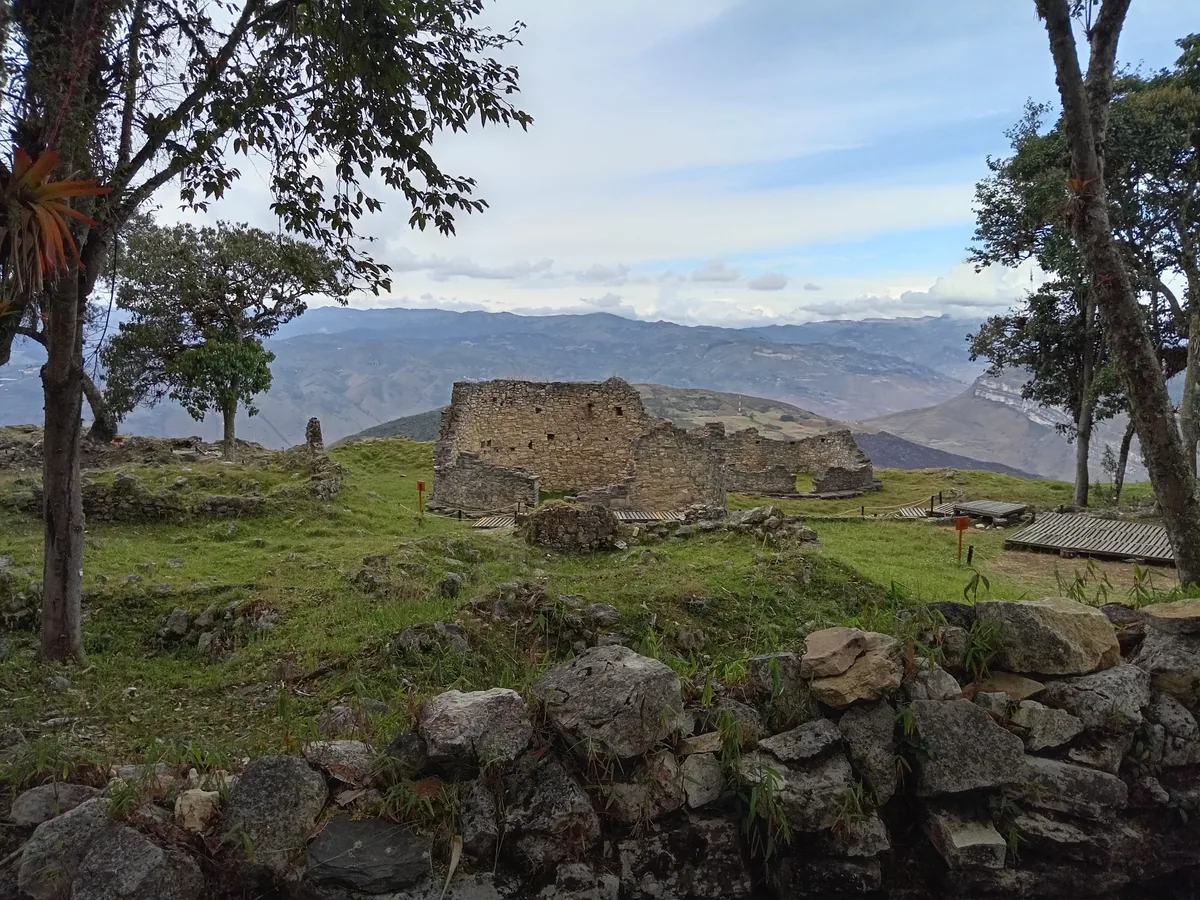
421 structures are recorded at Kuélap, all but five of them circular stone house foundations, some carrying rhomboid and zigzag friezes protected under stone cornices. Most survive only as low walls or foundations rather than complete buildings.
El Tintero (the "inkwell")
A 5.5-metre inverted-cone structure in the southwest of the site, also called Templo Mayor. Ceremonial remains found here have led some researchers to hypothesise it may have functioned as a solar observatory, though this remains an interpretation rather than a settled fact.
Pueblo Alto and El Torreón
A raised sector in the northwest, entered through two narrow gaps in an 11.5-metre wall. To its north stands El Torreón, a roughly 7-metre tower where stone weapons have been found, suggesting a defensive or lookout role.
Kuélap in pictures
Kuélap in pictures
A closer look at the walls, the ascent and what's inside — before you book.
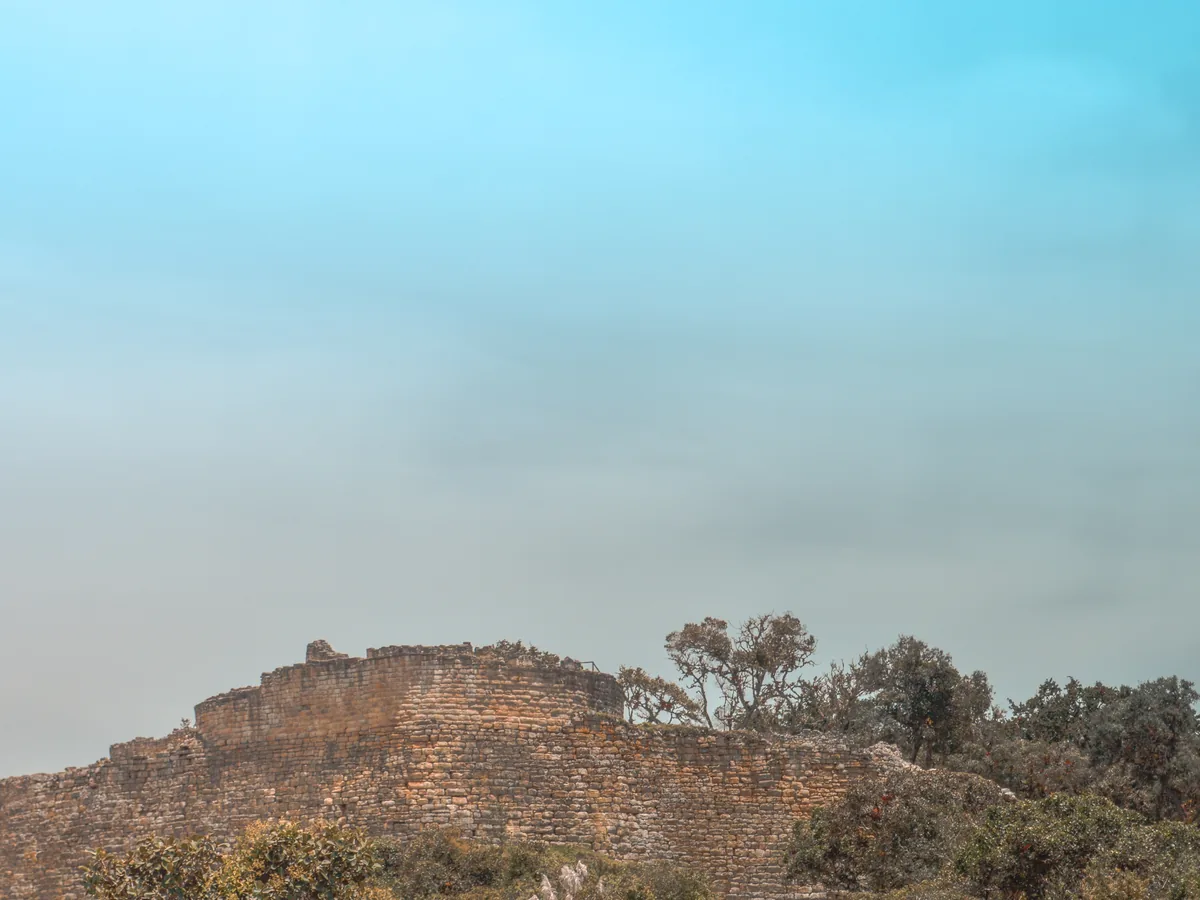
Kuélap's current condition
Kuélap's current condition — the 2022 wall collapse
Kuélap is not a fully static, finished ruin. Since 2013 the site has shown a series of structural instabilities, which culminated in the partial collapse of a section of the perimeter wall in April 2022. Peru's Ministry of Culture, working with Peruvian and international researchers, launched emergency conservation measures and ongoing scientific study to identify the causes and prevent further collapses. In 2025, archaeologists working at the site also uncovered a stone funerary structure with ceremonial offerings dated to the Late Horizon period (c. 1470–1532 AD) — a reminder the site is still an active excavation as well as a visitor attraction. None of this has closed Kuélap to visitors, and guided tours continue to run, but it's worth knowing the site is under real, ongoing conservation work rather than assuming it's a finished, unchanging monument — check current access with your operator close to your travel date.
Ways to visit Kuélap
Find a Kuélap tour for your dates
Every option below is bookable through GetYourGuide, with live availability and the final price shown in your own currency before you pay.
Cable car only, guided day tour, or multi-day — which to book
Cable car only, guided day tour, or a multi-day Amazonas trip
| Option | What it includes | Best for |
|---|---|---|
| Cable car + entrance only | Transport to the cable car base and site entry, without a guide or return transfer bundled in | Independent travellers already based near Nuevo Tingo who want to explore at their own pace |
| Guided full-day tour from Chachapoyas | Hotel pickup, the drive to Nuevo Tingo, cable car, guided walk through the fortress, and lunch — roughly 8–8.5 hours door to door | Most first-time visitors — the standard, least logistics-heavy way to see Kuélap |
| Multi-day Amazonas region trip | Kuélap combined with other regional sites over several days | Travellers with the time to turn Kuélap into a wider Chachapoyas-region trip rather than a single day |
Planning your Kuélap visit
Planning your Kuélap visit
How to visit Kuélap: the cable car, the day tour and getting there from Chachapoyas
A drive, a cable car through the clouds, then a walk — here's the full logistics of a Kuélap day.
Read more → Peru's two "lost cities"Kuélap vs Machu Picchu: how Peru's two stone cities actually compare
Older, higher, and far less visited — here's the real difference between Peru's two most famous ruins.
Read more → WARRIORS OF THE CLOUDSWho Were the Chachapoya? Warriors of the Clouds
Before the Inca ever reached this ridge, the Chachapoya built Kuélap, resisted two Inca rulers, then sided with Spain — here's who they really were.
Read more → HOW IT WAS BUILTKuélap's Architecture: Walls, Houses and El Tintero
The engineering behind Kuélap's towering walls, its hundreds of round stone houses, and the inverted-cone structure nobody has fully explained yet.
Read more → PLANNING THE WIDER TRIPBeyond Kuélap: Gocta Falls, Karajía and the Amazonas
How to base yourself in Chachapoyas, handle the altitude, and fit Gocta Falls, Karajía and Revash around a Kuélap day — kept general and practical.
Read more → STILL BEING EXCAVATEDKuélap's 2022 Wall Collapse and Ongoing Excavation
Why part of Kuélap's wall came down in 2022, what conservation work is underway now, and what a 2025 tomb discovery revealed about its long history.
Read more →GEO/FAQ
Kuélap questions
How do you get to Kuélap?
Almost every visitor bases themselves in Chachapoyas, then travels by road (roughly an hour) to Nuevo Tingo, where a cable car carries you up through the cloud forest in about 20 minutes. From the upper cable car station it's a further walk of roughly half an hour along the ridge to Kuélap's entrance. A longer dirt road route also exists, adding around 37km to the journey, but the cable car is the route almost all guided tours use.
Is Kuélap open every day?
No — Kuélap is closed on Mondays for site maintenance, and daily visitor numbers are reported to be capped (around 200 people a day), unlike a normal attraction with unlimited daily capacity. Neither of these limits moves for demand, so it's worth building your Chachapoyas visit around a non-Monday date rather than assuming any day works.
How does Kuélap compare to Machu Picchu?
Kuélap is considerably older — construction dates mostly to 900–1100 AD, versus Machu Picchu's 15th-century Inca build — and it sits higher, at roughly 3,000m against Machu Picchu's 2,430m. It also receives a fraction of the visitors. The trade-off is accessibility: Machu Picchu has a much larger, faster-growing tourism infrastructure, while Kuélap remains a longer, more remote journey via Chachapoyas. See our Kuélap vs Machu Picchu guide below for the full comparison.
Is the 2022 wall collapse a safety concern for visitors?
A section of Kuélap's perimeter wall partially collapsed in April 2022, following structural instabilities reported since 2013. Peru's Ministry of Culture responded with emergency conservation work and ongoing research, and guided tours have continued to operate since. It's a genuine reason to book with an operator who tracks current access conditions rather than assuming the site is unchanged, but it hasn't closed Kuélap to visitors.
How long does a Kuélap day tour take?
Budget around 8 to 8.5 hours door to door from Chachapoyas: roughly an hour's drive each way to Nuevo Tingo, about 20 minutes each way on the cable car, a walk to and from the entrance, guided time inside the fortress, and lunch, typically served in Nuevo Tingo on the way back.
What will you actually see inside Kuélap?
The perimeter walls and their narrow, single-file entrances; the 421 recorded structures, nearly all circular stone house foundations, some with rhomboid and zigzag stone friezes; El Tintero, a 5.5-metre inverted-cone structure some researchers think may have been a solar observatory; and Pueblo Alto with its defensive tower, El Torreón, in the site's northwest sector.
Is the price shown final, and how does booking work?
You book through GetYourGuide, which shows the final price in your own currency before you pay and states the cancellation policy for your specific date up front. We're an independent guide to visiting Kuélap, not Peru's Ministry of Culture or the tour operator; the booking itself is handled by GetYourGuide's secure checkout.